Well pad construction is the foundation of Permian Basin oil and gas production. Before any drilling rig can set up, before any wellhead goes in the ground, before any completion equipment arrives on location, someone has to build the pad. That means moving dirt, grading caliche, cutting in access roads, preparing reserve pits, and getting a flat, compacted, properly drained surface that will support the weight of a drilling rig and all the associated equipment through the duration of the well program.
In the Permian Basin, that work happens in conditions that test both equipment and operators. Caliche hardpan that resists penetration. Rocky outcrops that appear without warning below a thin layer of sandy soil. Summer heat that pushes machines harder. Tight oilfield schedules that leave no margin for equipment problems that delay a rig move.
Getting the right excavator on a well pad construction job before work starts is not a detail. It is the operational decision that determines whether the pad gets built on schedule or whether the rig contractor is waiting for a surface that is not ready.
What Well Pad Construction Actually Involves
A well pad in the Permian Basin is not just a cleared piece of ground. It is an engineered surface with specific grade requirements, drainage design, and load-bearing capacity that must support multi-million dollar drilling equipment.
The construction sequence on a typical Permian well pad starts with clearing and grubbing any surface vegetation and obstacles, followed by rough grading to establish the approximate pad elevation. From there, cut and fill work brings the surface to the required grade, which in West Texas typically means cutting into the surrounding caliche or building up low areas with material from adjacent cuts.
Reserve pit excavation is often part of the pad construction scope. These pits hold drilling fluids and cuttings during the drilling program and require precise dimensions and appropriate slopes on the pit walls to prevent sloughing. The excavator doing reserve pit work needs to have the reach and bucket capacity to clean cut the pit walls and floor to specification without requiring excessive repositioning.
Access road construction connects the pad to the nearest county or lease road and must handle the truck traffic of water haulers, pipe trucks, casing trucks, and cementing equipment that moves in and out throughout the drilling program. Road cuts into caliche or rocky ground require an excavator with the breakout force to penetrate material that surface graders cannot handle alone.
Berms and drainage control features around the pad perimeter direct runoff away from the production area and toward containment. In the flat terrain of the western Permian Basin, even small grade changes have significant drainage implications, and the final finish grade on a well pad requires precision that separates a competent excavator operator from one who is simply moving dirt.
Why Excavator Size Selection Matters on a Permian Basin Well Pad
Not every excavator is the right tool for every phase of well pad construction, and the instinct to always rent the largest available machine costs money without improving the outcome on jobs where a smaller, more maneuverable machine would perform better.
Compact Excavators on Well Pad Jobs
Compact excavators in the five to ten ton range are not the primary machines for well pad earthmoving, but they fill specific roles on pad construction jobs that larger machines cannot handle efficiently.
Trenching for temporary utility lines, conduit, and water supply connections that serve the drilling program requires precision in confined areas around the pad perimeter where a twenty-ton machine cannot maneuver without creating compaction or grade disturbance in areas that have already been finished. A compact excavator trenches these connections cleanly without disrupting surrounding work.
Cleanup work around the pad edges, berm shaping, and final grading adjustments near the substation or wellhead area benefit from the precision of a smaller machine that can position close to structures and features without risk of contact damage.
Mid-Size Excavators for Versatile Pad Work
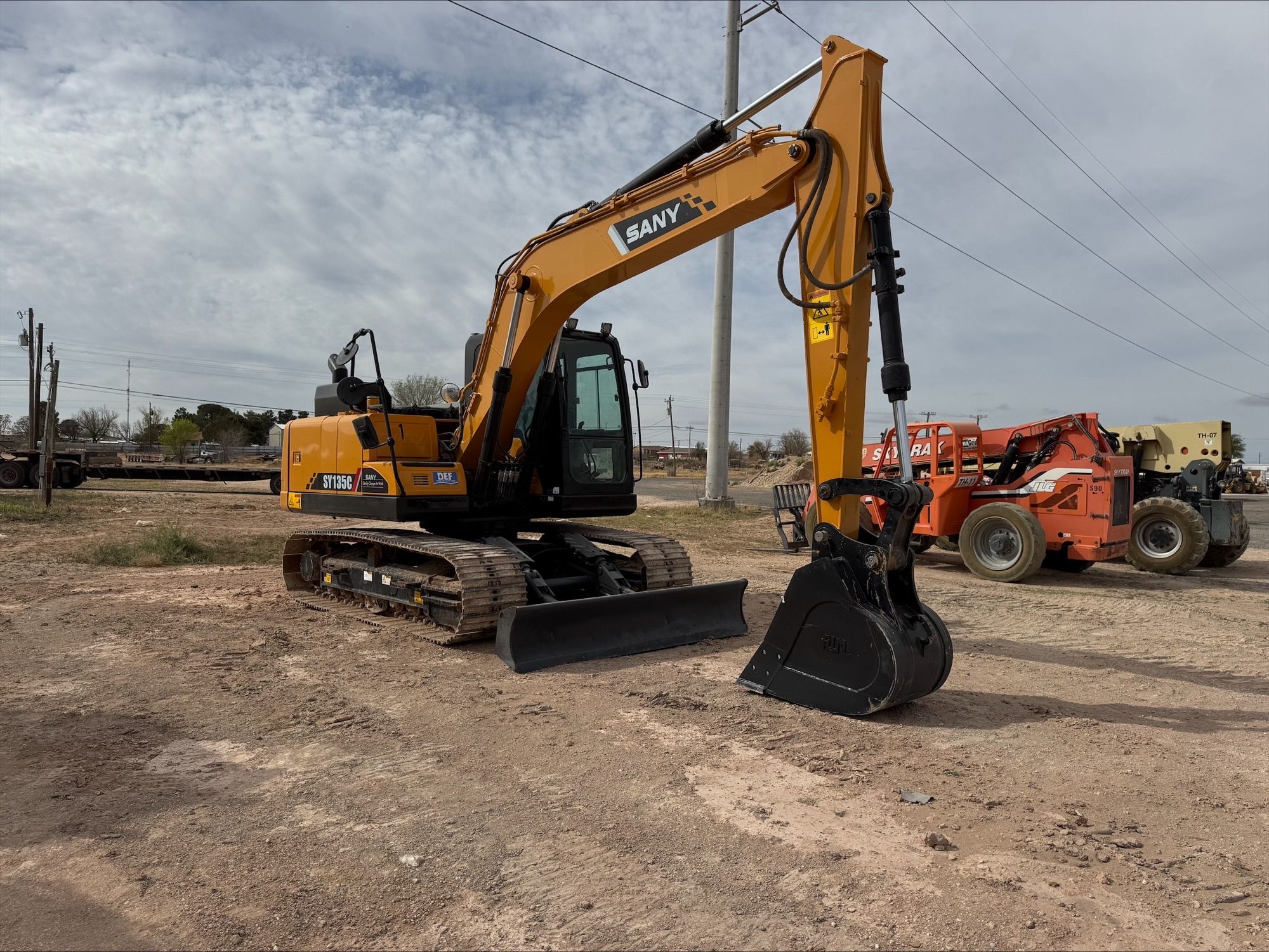
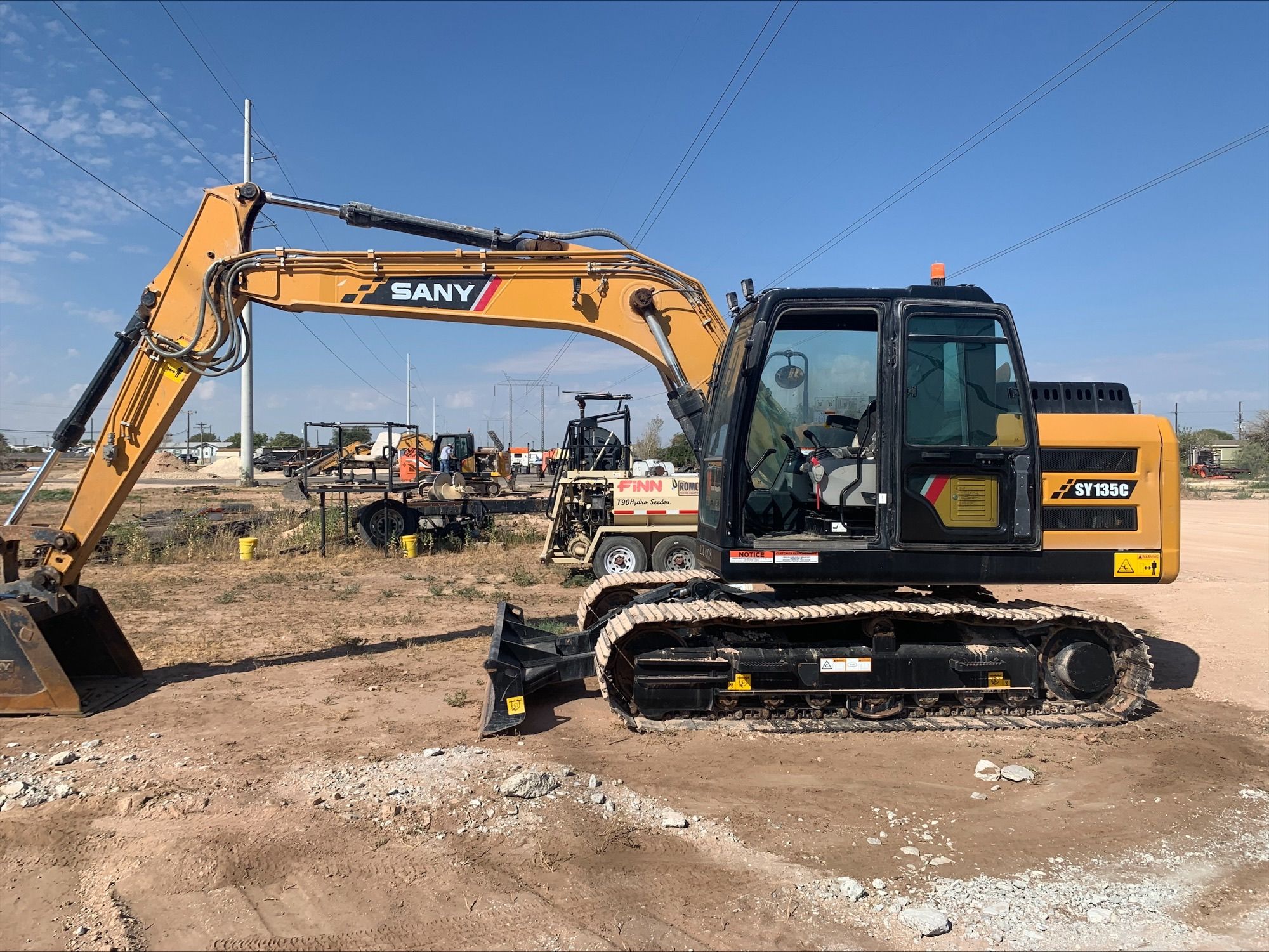
Mid-size excavators in the fifteen to twenty ton range are the most commonly used machines on Permian Basin well pad construction because they balance digging force, reach, bucket capacity, and maneuverability in a package that handles the full range of pad construction tasks efficiently.
These machines provide the breakout force needed to penetrate the caliche and rocky material that characterizes much of the Permian Basin subsurface without the setup and repositioning time that a large machine requires on a typical pad footprint. They can work the reserve pit without reaching the edge radius limitations that compact machines face at depth, and they handle access road cut work effectively in most West Texas soil conditions.
For operators who understand how to work caliche, the mid-size excavator on a well pad produces the consistent production rates that keep pad construction on the rig move schedule. The specific challenges of working in caliche and rocky West Texas soil, and how experienced operators adapt their technique, are covered in the article on excavating in caliche and rocky West Texas soil.
Heavy-Duty Excavators for Large Pad Programs
Large multi-well pad programs in the Permian Basin, where four or more wells are being drilled from a single pad location, involve earthmoving volumes that justify heavy-duty excavators in the twenty-five ton and above range. These machines move material faster, handle deeper reserve pit work, and maintain production rates in hard caliche that mid-size machines achieve more slowly.
For operators managing a compressed schedule where the pad must be complete before a rig move that cannot be delayed, the additional production capacity of a heavy-duty excavator is worth the higher rental cost when the schedule math supports it.
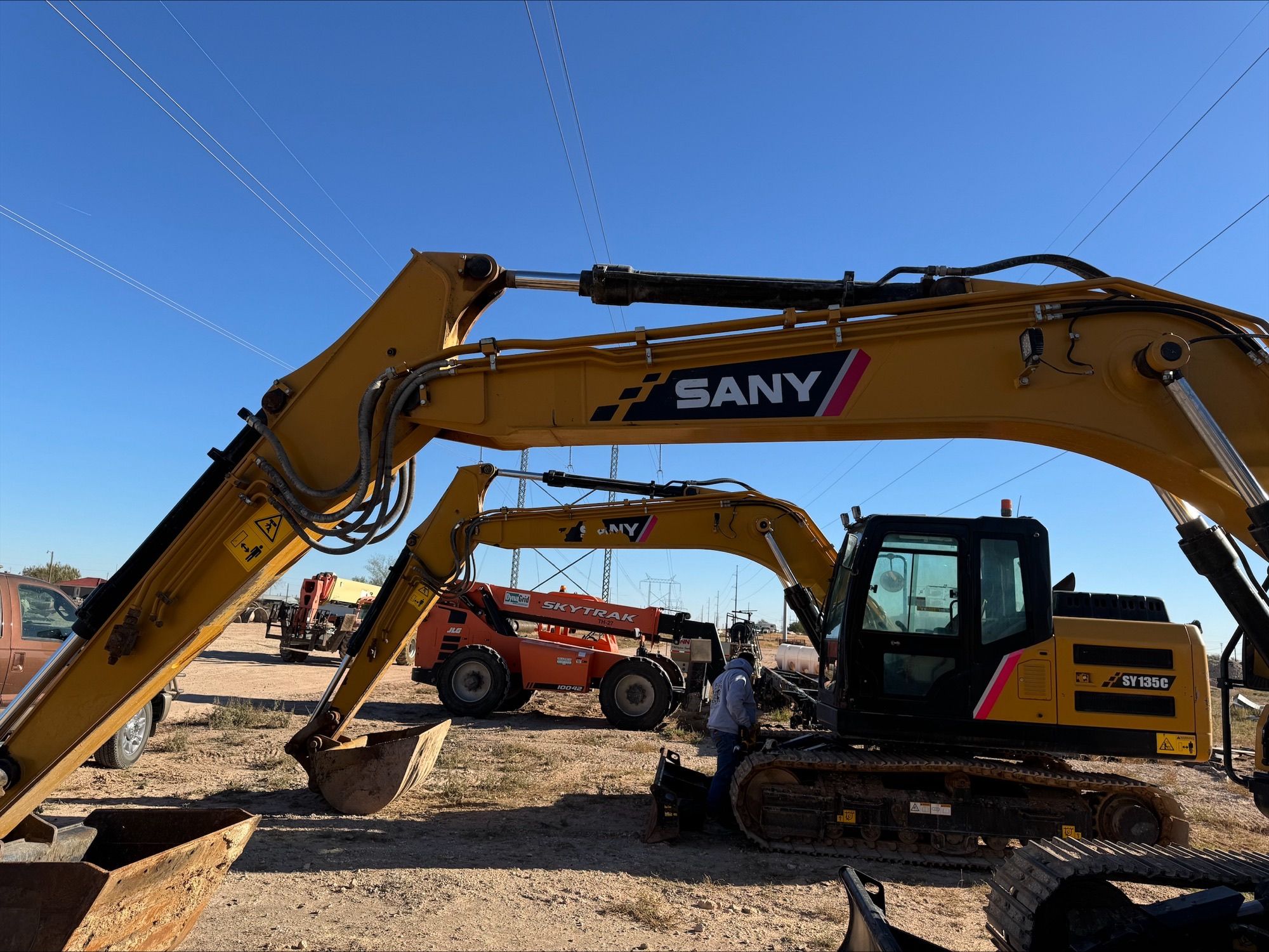
The full breakdown of SANY excavator models across all three size classes, and what each size is built to handle in Permian Basin conditions, is covered in the article on why SANY excavators are built for the Permian Basin.
Same-Day Delivery for Oilfield Schedules That Do Not Wait
Permian Basin oilfield schedules run on compressed timelines where a rig move date is set weeks in advance and every contractor on the program plans their work backward from that fixed date. A pad that is not complete when the rig arrives creates a cascade of delays that is expensive for every party involved.
Same-day excavator delivery is not a convenience on a well pad job. It is an operational requirement when a machine problem or a schedule change creates a gap that needs to be filled immediately. Midland Excavators operates out of Odessa with coverage across Midland, Pecos, and the full Permian and Delaware Basin footprint, which means same-day delivery to most well pad locations in the basin is a realistic commitment rather than an aspirational claim.
For E and P operators and oilfield construction contractors who need to confirm equipment availability before committing to a pad construction schedule, the reliable equipment support and response capability that Midland Excavators provides is covered in the article on reliable equipment support for West Texas projects.
Operator-Included Rental Packages for Well Pad Work
Some oilfield construction contractors have their own equipment operators and simply need the machine. Others need both the excavator and an experienced operator who knows how to work Permian Basin conditions. Midland Excavators offers operator-included rental packages for contractors who want to put a qualified operator behind the stick without the overhead of their own operator payroll.
An operator who has worked well pad construction across the Permian Basin brings specific knowledge to the job that an inexperienced operator on the same machine cannot replicate. Reading caliche conditions before committing to a bucket depth that will bog the machine. Recognizing the grade drainage patterns that the pad design requires and finishing to those patterns without constant survey input. Anticipating the machine positioning that minimizes cycle time on reserve pit excavation.
For oilfield contractors who are scaling up to handle more pad work than their current crew can support, operator-included equipment rental provides the capacity expansion without the full-time hiring and equipment ownership commitment. The comparison between renting with operator support and running your own crew on owned equipment is explored in the broader article on the benefits of renting excavators versus buying heavy equipment.
Excavator Rental for the Full Well Pad Construction Scope
Well pad construction is not always a single-phase project. The initial pad construction that prepares the surface for the drilling rig is followed by completion phase modifications when the drilling rig moves off and the completion crew moves in. Completion operations often require additional excavation for flowback pit preparation, additional berm work, and access modifications that the drilling phase did not anticipate.
Having a rental partner who can provide the right excavator for both the initial pad construction phase and the subsequent completion phase modifications, on the same short notice, changes how oilfield construction contractors plan their equipment schedules. Rather than locking in long-term owned equipment for work that occurs in phases with significant gaps between them, rental provides the machine when it is needed and no overhead when it is not.
Midland Excavators serves both phases of the well pad construction cycle with daily, weekly, and monthly rental terms that match the project schedule rather than forcing the schedule to match a fixed rental commitment. Flexible rental terms that fit oilfield project realities rather than standard construction rental structures are discussed in the article on excavator rentals in Midland, Odessa, and the Permian Basin.
Delaware Basin Well Pad Work
Midland Excavators serves the Delaware Basin as well as the Permian Basin, with coverage extending into southeastern New Mexico including Hobbs, Carlsbad, Artesia, Eunice, and Jal. Well pad construction in the Delaware Basin involves similar challenges to Permian Basin work with the addition of the specific soil and surface conditions of the Delaware sub-basin in New Mexico.
Delaware Basin well pad locations often involve more variable surface conditions than the flatter terrain of the central Permian Basin, with more topographic relief that creates cut and fill volumes that require excavator work alongside dozer and motor grader. An excavator with the reach and bucket capacity to handle steep cuts on access road approaches, and the precision for final grade work on the pad surface itself, is as important on Delaware Basin locations as it is anywhere in the Permian.
The equipment rental infrastructure that Midland Excavators has built across the New Mexico portion of the Delaware Basin means that oilfield construction contractors working those locations have the same same-day delivery and local support capability that Midland and Odessa-based operators have access to.
Choosing the Right Rental Terms for Well Pad Work
Well pad construction timelines vary considerably depending on pad size, number of wells, terrain conditions, and the complexity of the drainage and containment design. A single-well pad on flat terrain with accessible caliche might be complete in three to four days. A multi-well pad on more complex terrain with significant cut and fill requirements might run two weeks.
Matching the rental term to the realistic project duration prevents two common cost problems: paying for daily rates on a project that runs long enough to justify a weekly rate, and committing to a weekly rate on a project that finishes in two days.
Midland Excavators provides quotes that account for the project scope and help contractors select the rental term structure that produces the lowest total rental cost for the expected project duration. Getting that right from the beginning, rather than discovering the cost difference when the invoice arrives, is part of what makes the rental experience straightforward on a Permian Basin well pad job.The practical guidance for selecting the right excavator rental structure for West Texas construction and oilfield projects is covered in the article on excavator rental best practices for West Texas construction and Permian Basin projects.