Construction and energy projects in West Texas and the Permian Basin demand heavy-duty equipment that can perform under tough soil conditions, long working hours, and high production pressure. Excavators are at the center of most earthmoving operations, from oilfield development to road construction, pipeline installation, and land clearing.
However, choosing the right excavator rental is not always straightforward. Contractors must consider machine size, ground conditions, attachment requirements, fuel efficiency, and project timelines. A poor equipment choice can lead to downtime, increased fuel costs, and reduced productivity.
This guide explains practical strategies for selecting, renting, and using excavators effectively in West Texas jobsite conditions while maximizing efficiency and minimizing cost.
Understanding Excavator Requirements in West Texas
West Texas presents unique challenges for construction equipment. Soil composition, climate, and project scale all influence excavator performance.
Common conditions include:
- Hard-packed clay and caliche soil
- Rocky terrain in oilfield regions
- Dust-heavy environments
- High temperature fluctuations
- Remote jobsite locations
Because of these conditions, standard equipment may not always perform efficiently. That’s why contractors often rely on specialized rental solutions such as excavator rental services in Midland West Texas designed for demanding environments.
Understanding these factors is the first step in selecting the right machine.
Choosing the Right Excavator Size
Excavators come in multiple size categories, and selecting the wrong one can significantly impact project efficiency.
Mini Excavators
Best for:
- Residential construction
- Utility installation
- Tight access areas
Medium Excavators
Best for:
- Commercial construction
- Roadwork
- General earthmoving
Large Excavators
Best for:
- Oilfield operations
- Deep excavation
- Heavy-duty material handling
Many contractors working in the Permian Basin prefer mid-to-large machines due to high production demands, as highlighted in choosing the right excavator for construction projects in West Texas .
Renting vs. Buying Excavators
One of the most important decisions contractors face is whether to rent or purchase equipment.
Benefits of Renting:
- Lower upfront cost
- Access to newer equipment
- Reduced maintenance responsibility
- Flexibility for project-based needs
- No long-term storage costs
Benefits of Buying:
- Long-term asset ownership
- Full control over equipment usage
- Potential tax advantages
For most contractors in West Texas, renting provides better flexibility and financial control, especially for short-term or fluctuating projects. This is further explained in benefits of renting excavators vs buying heavy equipment .
Matching Excavators With Jobsite Conditions
Not all excavators perform equally in every environment. Matching the machine to jobsite conditions is critical for productivity.
Consider:
- Soil hardness
- Dig depth requirements
- Material type (rock, clay, sand)
- Terrain slope
- Weather exposure
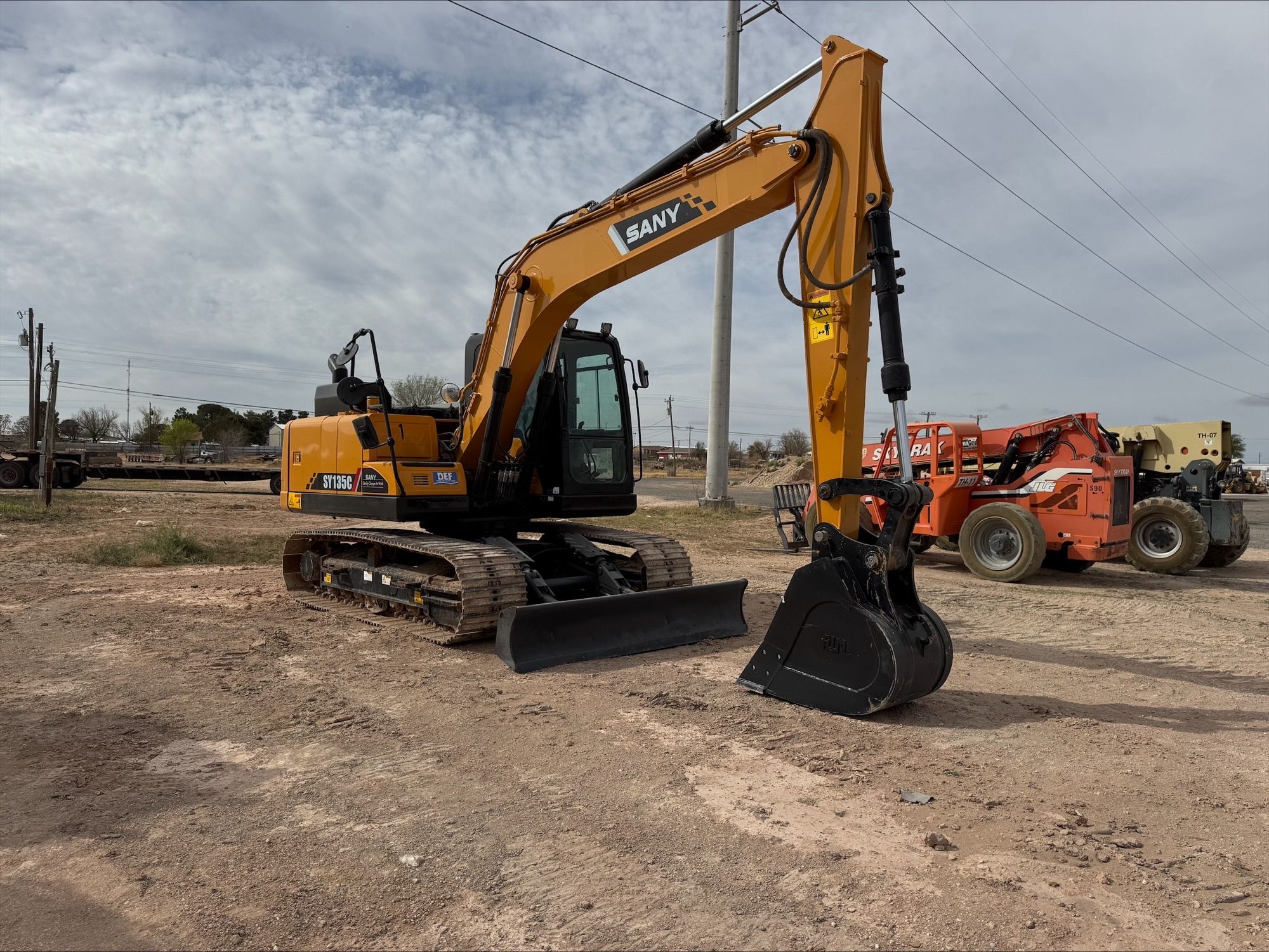
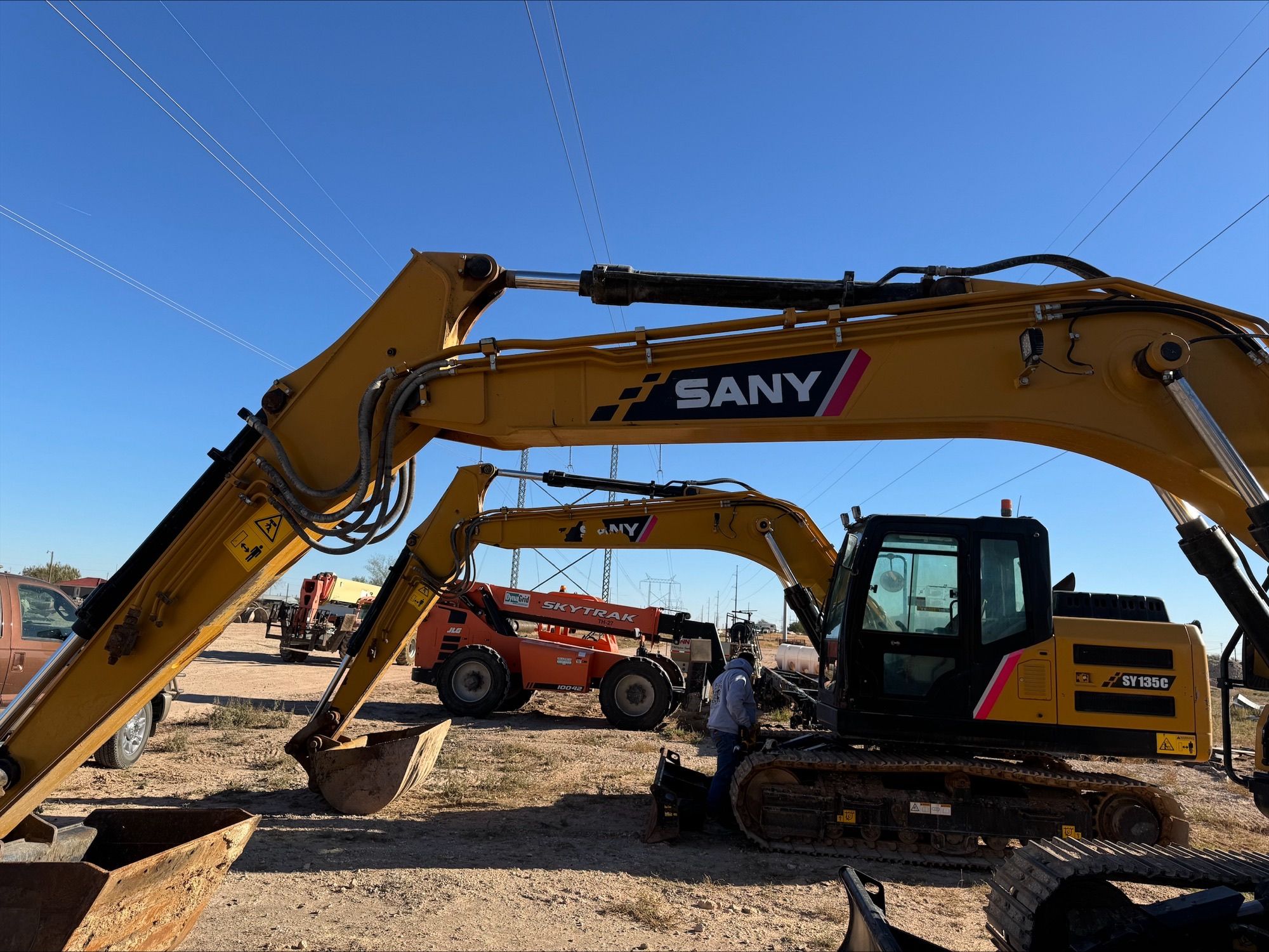
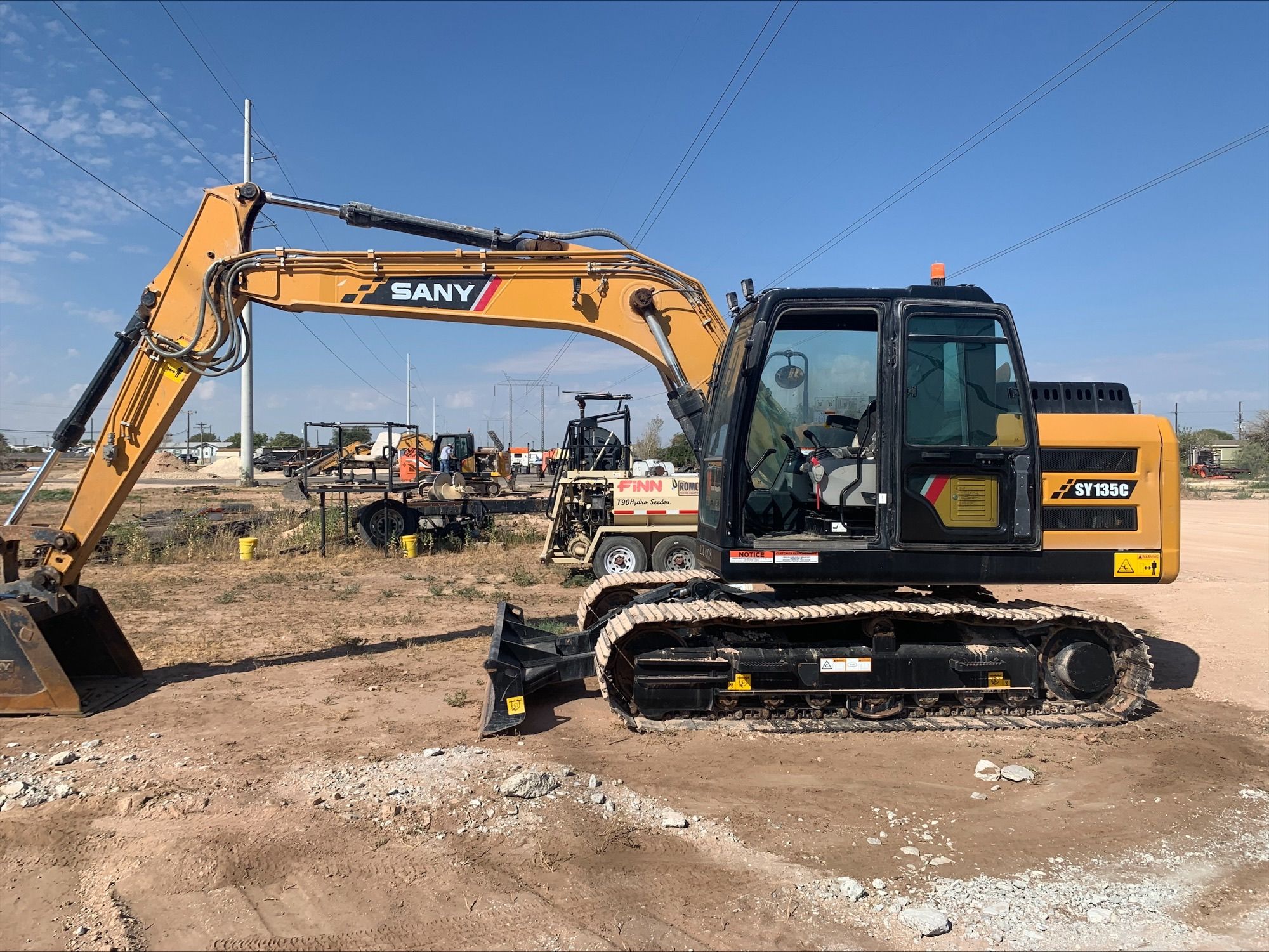
For example, oilfield construction in the Permian Basin often requires heavy-duty machines designed for durability and continuous operation, such as those discussed in why SANY excavators are built for the Permian Basin .
Importance of Attachments for Excavator Efficiency
Attachments significantly expand the functionality of an excavator. Choosing the right attachment can improve productivity and reduce the need for multiple machines.
Common attachments include:
- Buckets (standard, trenching, rock)
- Hydraulic breakers
- Augers
- Grapples
- Rippers
Using the correct attachment allows contractors to complete tasks faster and more efficiently, especially in multi-phase projects.
Excavator Rental Planning for Large Projects
Proper planning is essential when working on large-scale construction or oilfield projects.
Key planning steps include:
- Estimating excavation volume
- Defining project timelines
- Identifying material types
- Planning machine utilization schedules
- Coordinating support equipment
Poor planning often leads to idle equipment or delays in critical project phases.
Contractors in Midland and surrounding areas often rely on structured rental planning systems like those described in excavator rentals in Midland TX .
Reducing Downtime on the Jobsite
Downtime is one of the most expensive issues in construction. Even a few hours of inactivity can impact deadlines and increase costs.
To reduce downtime:
- Inspect equipment before use
- Monitor hydraulic systems
- Keep backup attachments available
- Train operators properly
- Schedule preventive maintenance
Reliable equipment support is especially important in remote West Texas locations, as explained in reliable equipment support for West Texas projects .
Excavator Fuel Efficiency and Operating Costs
Fuel consumption is a major cost factor in heavy equipment operations.
To improve efficiency:
- Avoid unnecessary idling
- Use correct machine size
- Maintain hydraulic systems
- Train operators for efficient digging techniques
- Plan excavation sequences properly
Fuel-efficient operations can significantly reduce project costs over time, especially on long-duration oilfield and infrastructure projects.
Safety Best Practices for Excavator Operations
Safety is critical when operating heavy machinery.
Essential safety practices include:
- Daily equipment inspections
- Clear communication between operators and ground crews
- Proper use of PPE
- Safe digging around utilities
- Maintaining stable ground conditions
Well-trained operators reduce accident risk and improve productivity.
Maintenance Tips for Rental Excavators
Even rental equipment requires proper care during use.
Key maintenance steps:
- Check fluid levels daily
- Inspect tracks and undercarriage
- Clean air filters regularly
- Monitor hydraulic hoses
- Report issues immediately
Preventive maintenance ensures consistent performance throughout the rental period and prevents costly breakdowns.
Excavators in Oilfield and Energy Projects
The Permian Basin is one of the most active oil and gas regions in the United States, requiring reliable excavation equipment for:
- Pipeline trenching
- Site preparation
- Facility construction
- Road building
- Land reclamation
Heavy-duty excavators are essential for meeting production deadlines in these demanding environments.
Environmental Considerations in Excavation Work
Modern excavation projects must also consider environmental impact.
Best practices include:
- Minimizing soil disturbance
- Managing runoff and erosion
- Reducing emissions through efficient equipment use
- Proper waste handling
Sustainable excavation practices help ensure compliance and reduce long-term environmental impact.
Final Thoughts
Excavator rental decisions play a major role in the success of construction and energy projects in West Texas and the Permian Basin. Selecting the right machine, planning effectively, and maintaining equipment properly can significantly improve productivity while reducing costs.
By understanding jobsite conditions, choosing appropriate machine sizes, leveraging attachments, and following best operational practices, contractors can complete projects more efficiently and safely.
Whether working in Midland, Odessa, or remote oilfield locations, strategic equipment selection remains the foundation of successful excavation work.