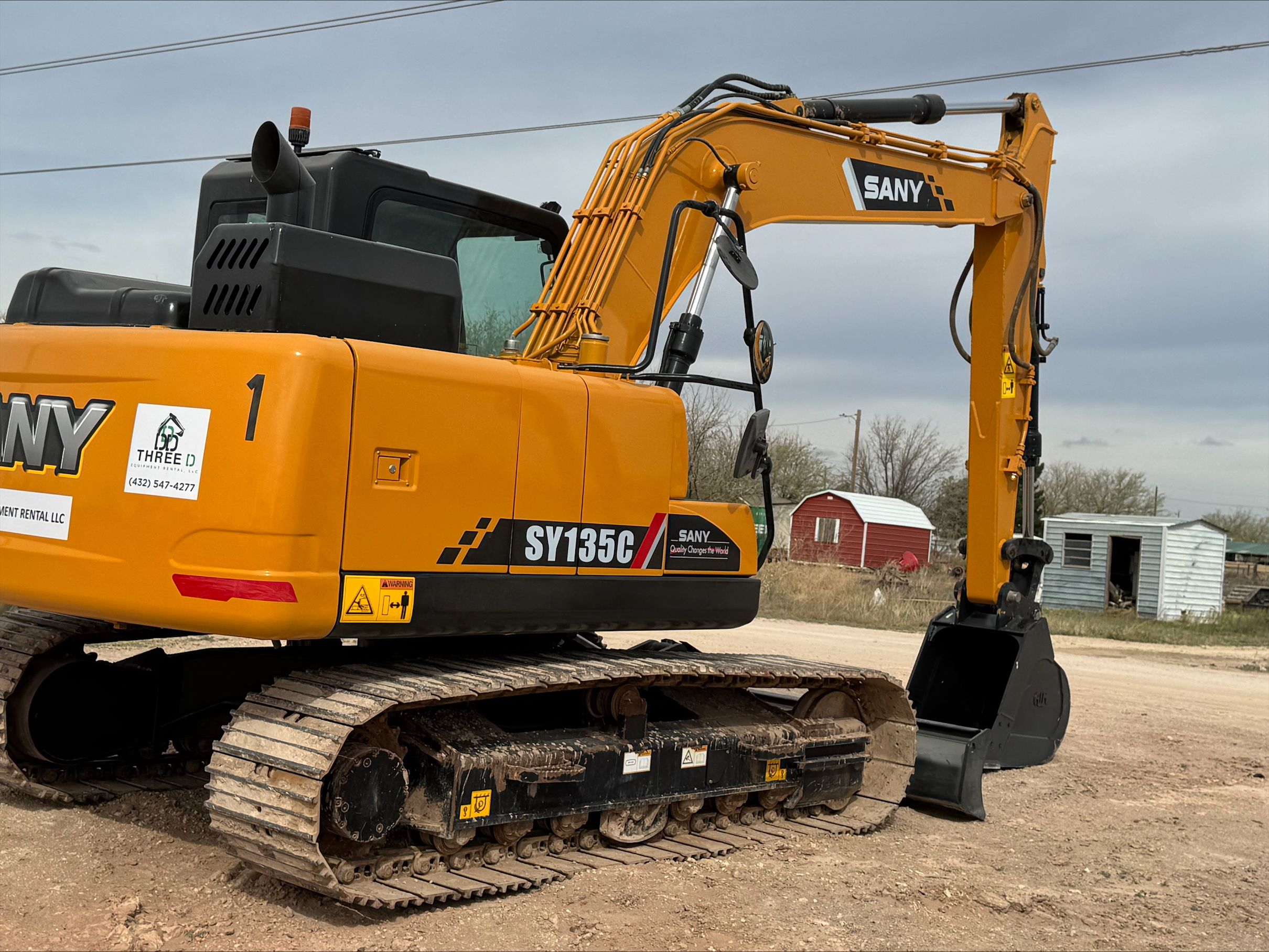
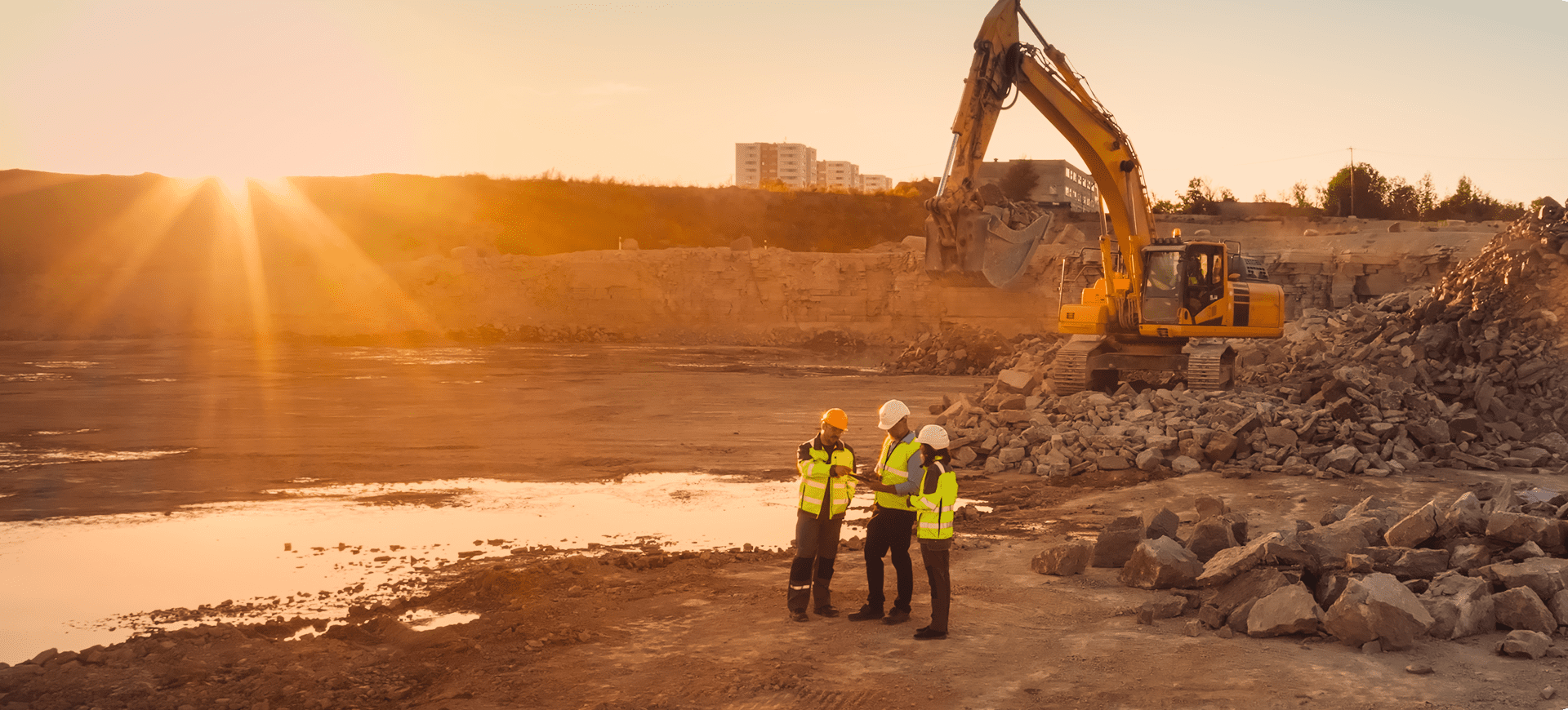
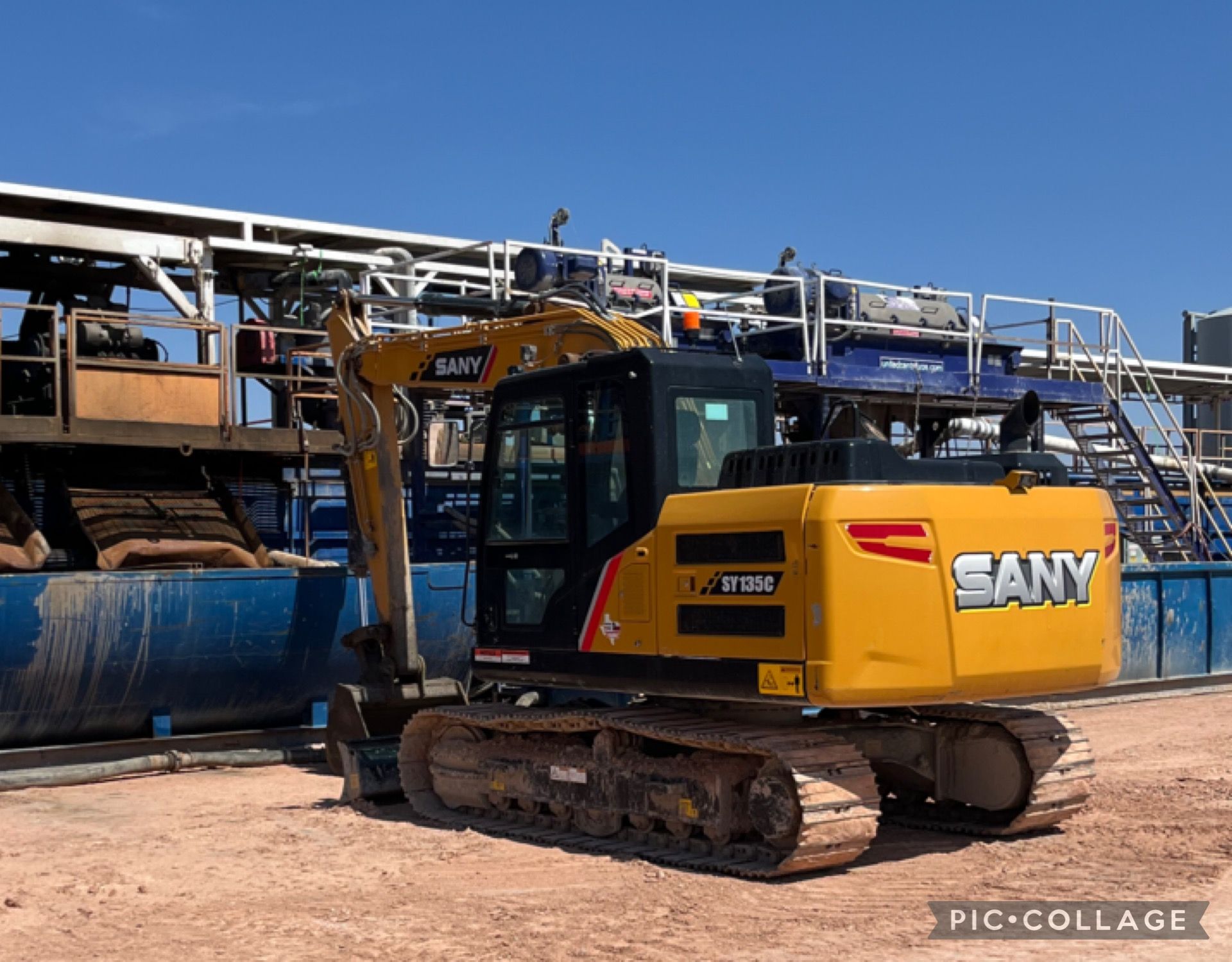
General construction excavation and oilfield work in the Permian Basin are not the same job, even when the equipment involved looks similar on paper. Pad site preparation, pipeline trenching, and tank battery excavation all come with their own ground conditions, timeline pressures, and safety considerations that don't map cleanly onto a typical commercial or residential construction project. Contractors working across Midland, Odessa, and the surrounding basin need to think about excavator selection differently when the job is oilfield-driven rather than general site work.
This article covers what makes oilfield and pipeline excavation distinct, the ground conditions that shape equipment decisions across the Permian Basin, and what contractors should prioritize when specifying excavators for this kind of work.
The Range of Oilfield Excavation Work
Oilfield and pipeline construction covers a wider variety of excavation tasks than people outside the industry often realize. Pad site preparation involves clearing, grading, and leveling the location where drilling and production equipment will sit, often requiring significant material movement to create a stable, level working surface. Pipeline trenching involves digging long, continuous runs at specific depths and grades to accommodate gathering lines and transmission pipe, work that demands consistency over distance rather than the more localized digging typical of building foundations. Tank battery excavation, access road cutting, and berm construction around containment areas round out the range of tasks that a single oilfield project might require from an excavation crew.
Each of these tasks puts different demands on an excavator, and contractors who treat oilfield excavation as a single, uniform category of work often end up with equipment that's well suited to one part of a project and poorly matched to another.
Ground Conditions Across the Permian Basin
West Texas ground conditions are notoriously tough on excavation equipment. Caliche, a hard, calcium carbonate-cemented soil layer common throughout the region, can be difficult to break through without adequate bucket force and the right tooth configuration, and it behaves very differently from the looser, more workable soils common in other parts of the country. Beneath the caliche, contractors frequently encounter rock layers that require even more aggressive digging force or specialized attachments to penetrate efficiently.
Our article on why SANY excavators are built for the Permian Basin covers how equipment engineered for this kind of demanding ground performs differently than machines better suited to softer soil conditions, and that distinction matters enormously for oilfield work specifically, where caliche and rock are the rule rather than the exception across much of the basin.
Sizing Excavators for Pad Sites vs. Pipeline Trenching
Pad site preparation and pipeline trenching call for meaningfully different equipment specifications, even though both fall under the broader oilfield excavation umbrella. Pad sites typically benefit from larger excavators capable of moving significant volumes of material quickly to achieve the grading and leveling a drilling location requires. Pipeline trenching, by contrast, often calls for excavators sized and configured for precise, consistent depth control over long, continuous runs, where digging speed matters less than maintaining accurate grade across the entire length of the trench.
Our guide on choosing the right excavator for your construction project in West Texas covers the general principles behind matching equipment size to project scope, and oilfield work is a good example of why a single excavator specification rarely serves an entire project well when the work shifts between pad preparation and pipeline installation on the same job.
Attachments Built for Oilfield Ground Conditions
Standard digging buckets often aren't enough when caliche or rock layers are part of the job. Rock buckets, ripper attachments, and in some cases hydraulic hammers become necessary tools for breaking through the harder ground conditions common across much of the Permian Basin, and having the right attachment available before a crew hits an unexpected rock layer mid-project avoids costly delays waiting on equipment to be brought in.
Our article on excavator attachments and jobsite efficiency in West Texas covers the broader range of attachments worth having access to on a West Texas project, and oilfield work in particular benefits from having ground-breaking attachments readily available given how frequently caliche and rock show up across pad sites and pipeline routes throughout the basin.
Safety Considerations Specific to Oilfield Sites
Oilfield excavation carries safety considerations that go beyond standard construction site awareness. Existing buried pipelines, flowlines, and utility infrastructure are common across active oil and gas areas, making utility locating and line verification before digging an absolute requirement rather than a best practice. Sites with active production nearby also carry additional hazard awareness needs, including H2S exposure protocols in areas where that risk applies, that general construction crews may not encounter on a typical commercial project.
Our guide on excavator operator safety and daily inspection in West Texas covers the operational safety fundamentals that apply broadly across excavation work, and oilfield sites layer additional site-specific hazard awareness on top of that baseline, making thorough pre-job site assessment and clear communication with the operating company's safety requirements essential before work begins.
Rental vs. Ownership for Project-Based Oilfield Work
Oilfield and pipeline projects often run on their own distinct schedules tied to drilling activity, production timelines, and pipeline construction phases that don't always align neatly with a contractor's broader equipment fleet planning. This project-driven nature makes rental an especially practical option for many oilfield excavation needs, allowing contractors to match equipment capacity to a specific project's demands without carrying excavators that sit idle between oilfield contracts.
Our article on 5 benefits of renting excavators vs. buying heavy equipment covers this decision more broadly, and the logic applies with particular force in oilfield work, where project timelines and locations shift frequently enough that flexible equipment access often outweighs the benefits of ownership for contractors who aren't running oilfield excavation as their sole, continuous line of business.
Planning Ahead for Multi-Phase Oilfield Projects
Larger oilfield developments often move through several distinct excavation phases over the life of a project, starting with access road and pad site preparation, moving into pipeline installation as production infrastructure comes online, and sometimes returning later for expansion or additional tie-in work as a field develops further. Contractors who plan equipment needs across this full sequence, rather than treating each phase as a separate, disconnected rental decision, tend to get better pricing and more reliable equipment availability than those scrambling to source machines phase by phase as each new need arises.
This kind of forward planning also helps avoid a common scheduling conflict in the basin: multiple operators and contractors often need similar equipment during the same active drilling windows, when regional demand for excavators and attachments spikes across Midland and Odessa simultaneously. Establishing a rental relationship and communicating anticipated equipment needs well ahead of each project phase gives a contractor a real advantage when that regional demand tightens.
Working With a Rental Provider Who Understands Oilfield Logistics
Getting the right excavator to a remote pad site or pipeline route on time matters as much as having the right equipment specification in the first place. Oilfield locations across the Permian Basin are often further from town, harder to access, and subject to operator site requirements that a rental provider unfamiliar with the industry might not anticipate.
Our guide on excavator rentals in Midland, Odessa, and the Permian Basin speaks directly to this regional logistics reality, and working with a provider who already understands oilfield site access, delivery timing, and the operational rhythm of the basin reduces the friction that can otherwise slow down a time-sensitive drilling or pipeline schedule.
Why Efficiency and Uptime Matter More on Oilfield Timelines
Oilfield projects are frequently tied to tight, revenue-driving schedules where drilling can't begin until pad preparation is complete, or a pipeline can't go into service until trenching and installation finish on schedule. Equipment downtime on an oilfield project doesn't just delay the excavation work itself; it can push back an entire production timeline with real financial consequences attached.
Our article on how modern excavators improve construction efficiency in West Texas covers how equipment technology and reliability translate into fewer delays and more predictable project timelines, which carries added weight on oilfield work where the cost of downtime extends well beyond the excavation contractor's own bottom line.
Final Thoughts
Oilfield and pipeline excavation across the Permian Basin asks more of both equipment and contractors than typical construction work, from breaking through caliche and rock to navigating buried infrastructure safely to keeping pace with drilling and production schedules that don't leave much room for delay. Matching excavator size, attachments, and rental logistics specifically to the demands of oilfield work, rather than treating it as interchangeable with general construction excavation, is what keeps pad sites, pipelines, and the broader projects depending on them moving on schedule.